Newport Race Riots
1917
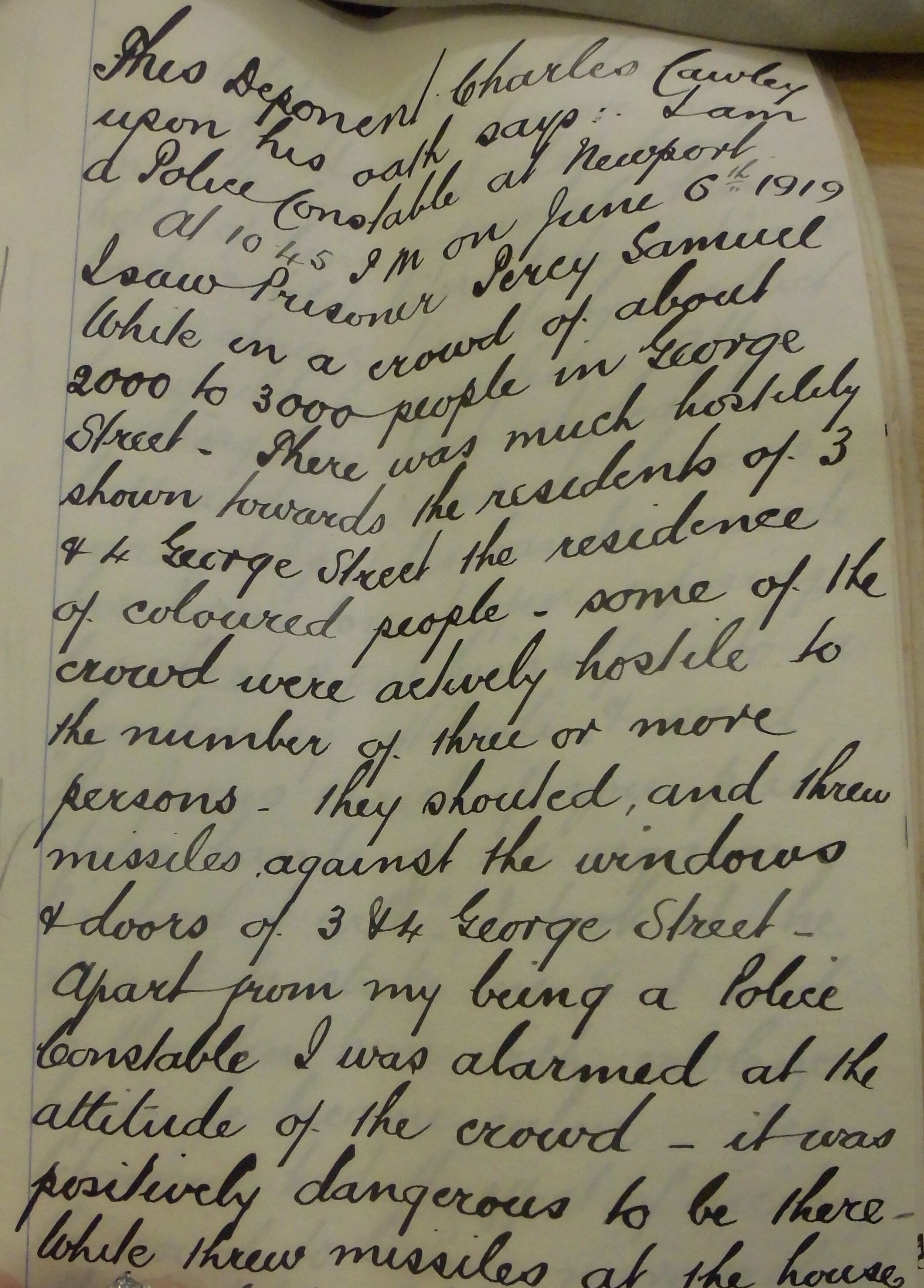
From 1917, Newport had a series of Racial Riots which focused on the residents of Seamen’s boarding houses. Rioting began in Newport when African Seamen opened boarding houses. In 1917, John Davies, a seaman from Sierra Leone, opened a boarding house at number 3 and 4 George Street.
1919
Our Race Riot Project is a partnership Project with ‘The Bigger Picture’ and investigates the history of the Race Riots of 1919 in Newport, which accumulated in a series of riots in Port towns, including, Newport, Cardiff, Barry, Liverpool, South Shields and Hull. We aim to challenge perspectives, by focusing on the life of individuals who lived in the streets where the events unfolded and to use the information in educational workshops and exhibitions. We first focused our attention on the men who were in the boarding house in George St on June 6th, many of whom it is stated were ‘arrested for their protection’ and were acquitted later. These men are also part of our African Connections project which charts the migration of African seamen to Britain prior to the first world war.
Our Publication Titled ‘Newport’s Forgotten History’: The 1919 Race Riot, is available from ourselves and also available on Amazon.
People
Many of the men were part of a community of Seamen who came from Liberia and Sierra Leone. By 1919 many had settled in the Ports of Newport, Cardiff and Barry and had families.
Some of the men in the boarding house on the Night of June 6th include:
Tom Savage, Joe Ellis, John Davies (Boarding house owner), Patrick Galland, John Roberts, George Hemmic, Daniel Smart, John Shilling, Tom Glasgow, Jack Harris, Toby Jackson, Charles Morris, John Brass, Wyman Morris, Jack Purser (Also known as Prosser), George Smith, Charles Brown, Jacob Brown, James Watts, James Payne, Charles David, Texas Brown (Possibly African-American) and Jack Savage.
Daniel Sinclair was reported as wanting to speak on behalf of the men in court however Illness prevented him. Research suggests he wasn’t African and was Cardiff’s ‘Danny Sinclair’.
A letter sent to the Colonial Office dated April 9th 1919 suggests the house was also the residence of Mr William Clark. Mr Clark wrote asking for assistance on behalf of himself and 200 other seamen who were unemployed.
Records indicate that an African Seaman, Percy White was part of the crowd attacking the Boarding house in George Street. Percy was later arrested at the Young Men’s Christian Association in Newport and he skipped bail. Later found in Bristol, Percy was brought back to Newport. Records Indicate he remained in Newport and returned to seafaring. We have added his picture however it remains unclear whether he had connections to these men at the time of the Riots.
It should also be noted that Tom Savage was one of 5 Brothers all known as Tom. Tom’s brother recently died at the lodging house after collapsing at Newport Dock. His death was registered on the 6th of June, the day of the riot. It remains unlear as to whether his body was in the house that night and we have been unsuccessful in locating a burial location.
These Images are subject to Copyright and are courtesy of the National Archives.
Many thanks to Gwent Archives who provided crucial material for this project in the form of the Race Riots Depositions and to Newport City Council for allowing us to publish the Depositions.


Original Documents
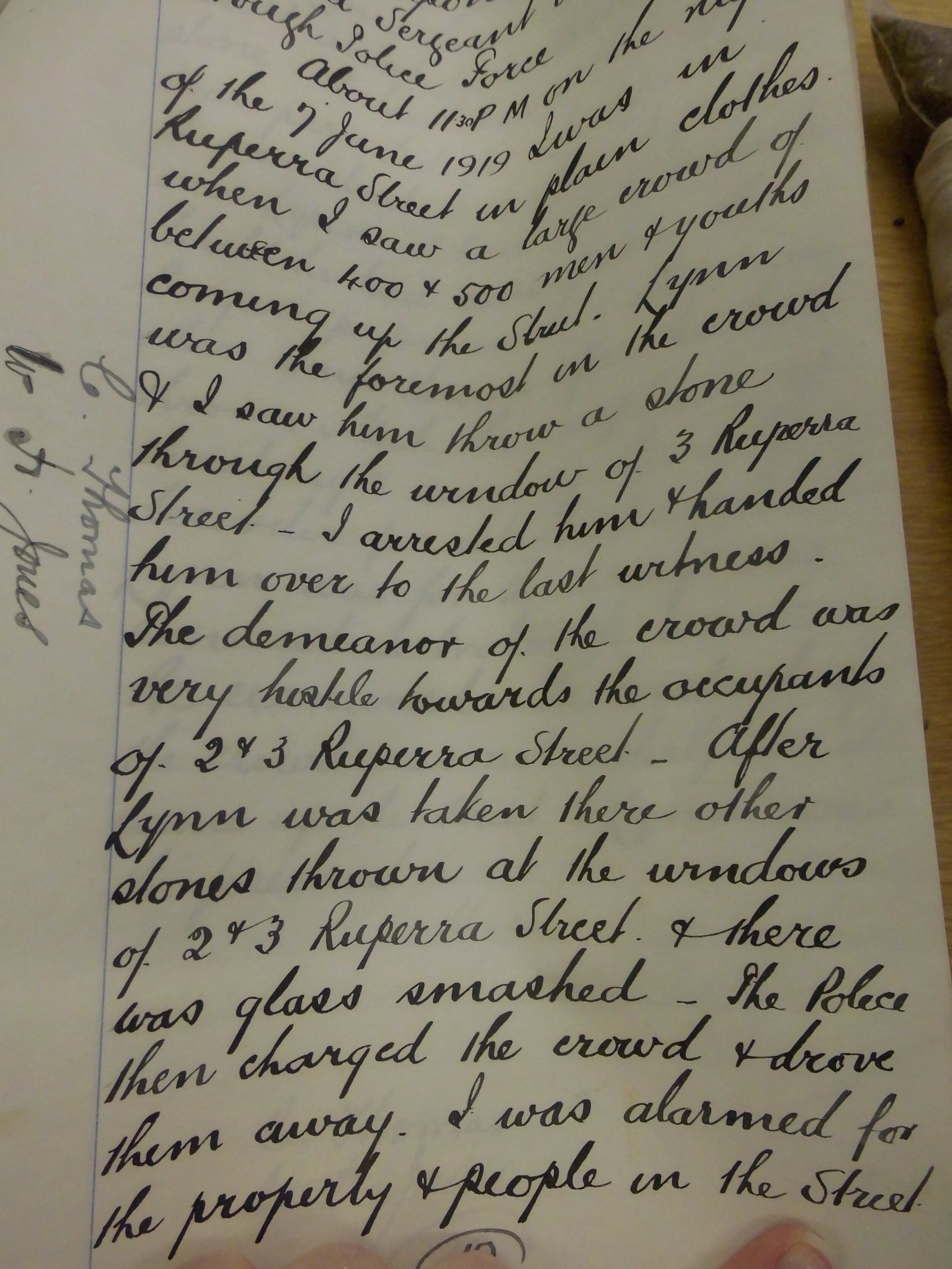
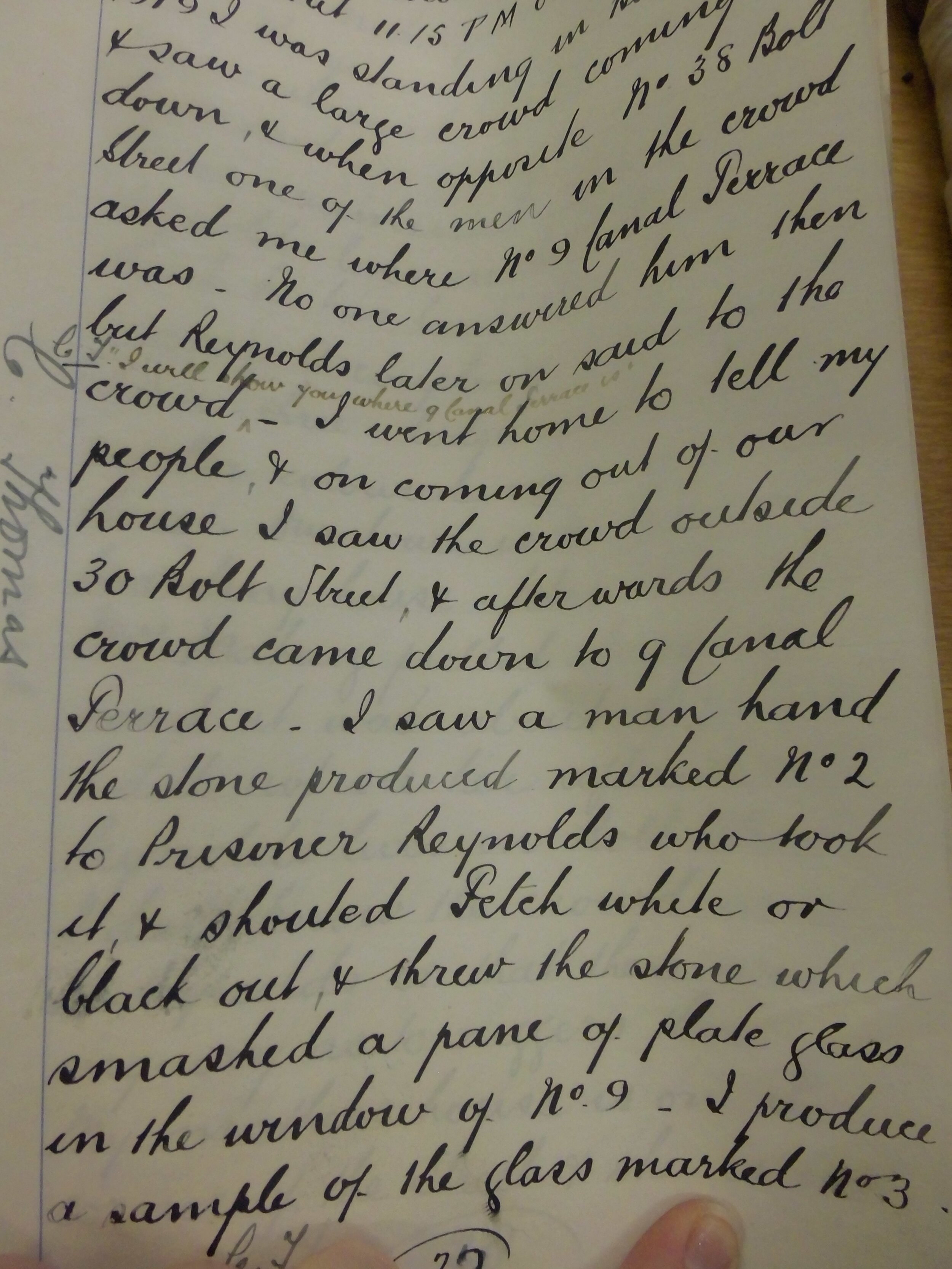
The documents below are the original Depositions made by witnesses to the court. They are the only known surviving documents which reveal how witnesses reported what was happening.
The documents largely focused on the members of the crowd and not on the many people within the houses affected by the violence.
There are no depositions from the owners of the ‘Chinese Laundry’.
Locations


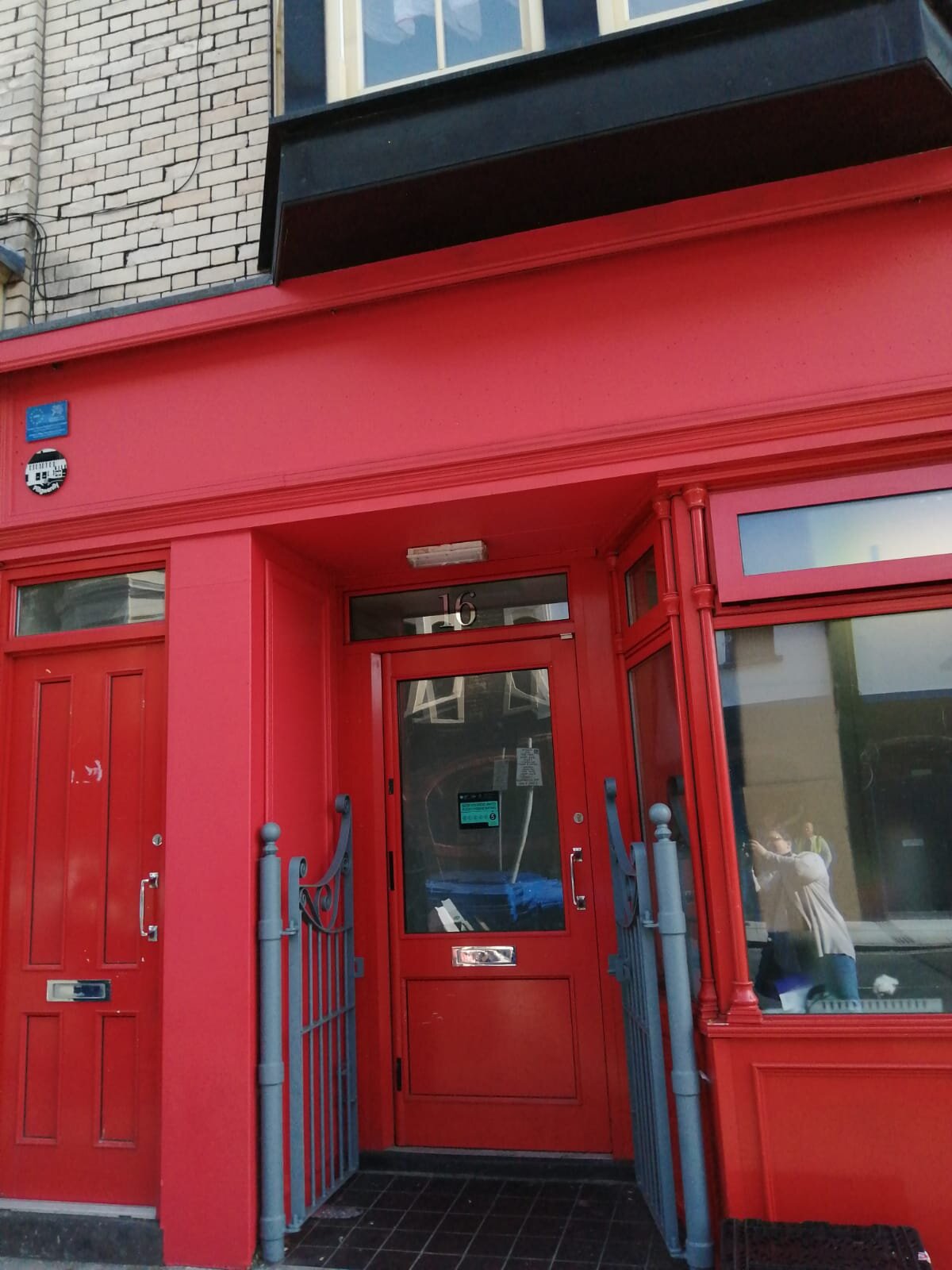

Within the Aftermath of the Riots, the damage to the houses were likened to ‘The Blitz’. While many residents continued to live in the properties, some moved out.
Following the riot, damage claims were sent in to the Watch Committee. Damages totalling £700 were applied for, for damages to number 3 & 4 George Street. £200 was applied for loss of money and belongings, including: Silver Spoons, Watches, Alberts, rings and other jewellery, £7 for a family bible, a fur coat etc.-
Newport’s very own ‘House through time’.
Many of the houses that were damaged during the Riots, are still here today.
3, Ruperra Street has had an interesting history.
Following the Race Riot of 1919, the owners moved out and sold the property to Caleb Augustus Dickinson who was living in Newport. Caleb was a Seaman from Jamaica who ran a Grocers shop at number 3. He lived nearby at number 8, Ruperra Street with his family.
Caleb successfully took the council to court for damages for his property which amounted to £18.
Caleb paid for his son Roy to attend private school and Roy later served in the Royal Navy in WW2 on HMS Formidable.
Find out more about Roy here: https://www.peoplescollection.wales/items/1834191
When Caleb’s family left number 3, Benjamin Johnson, an African Seaman from Liberia moved in. The house still had a shop front and the family lived in the middle part of the house and had lodgers on the lower floor.
Find out more about the families that lived here on History Points:
https://historypoints.org/index.php?page=site-of-seamens-lodgings-pill-newport
1920
In June of 1920, a riot broke out at number 2 Ruperra Street which was an ‘Arab boarding house’. The cause was reported as being the signing on of Black Seamen over White Seamen.